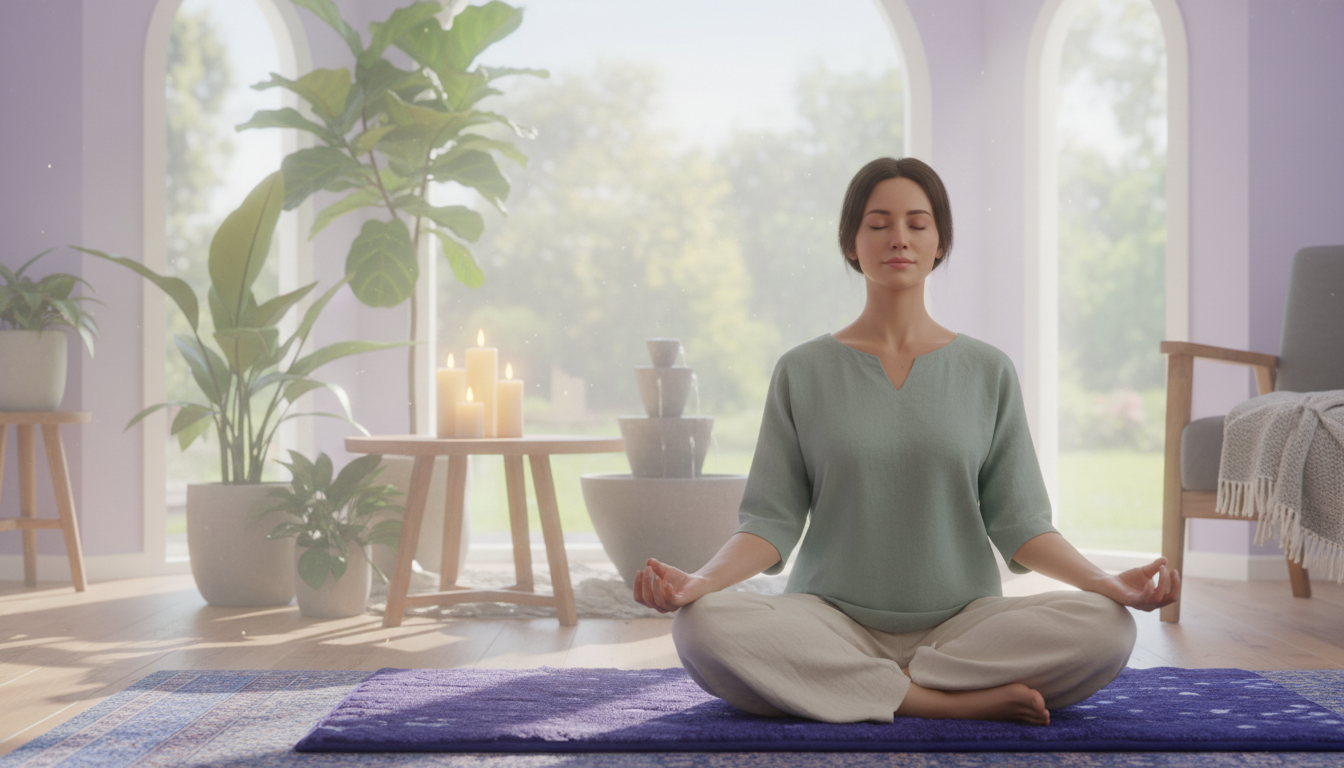
Stillness isn’t a trait you’re born with — it’s a skill you build. This guide shows how simple, repeatable practice helps you steady attention and quiet reflexive thinking. The aim is not a forever-blank mind but learning to work with your mind, moment by moment.
We’ll define what meditation is, explain how it changes brain and body, and offer easy methods you can try. Think breath work, body scans, walking, mantra, and loving-kindness. Each method trains attention and awareness without judgment.
Expect distractions. That is normal. Noticing wandering and gently returning attention is the actual training. This article is for busy people in the United States who want practical ways to cut stress and build calm in a hectic world.
What you’ll gain: a simple anchor technique: focus attention, notice wandering, return with kindness. Modern research using EEG and fMRI shows regular practice links to clearer attention and more emotional stability, and we’ll keep the steps very approachable.
Why Stillness Feels Hard in a Busy World
When every app pings, stillness starts to seem like a foreign skill. The brain learns habits from how you use your day, so constant notifications and multitasking keep attention in high gear.
Autopilot minds and constant “brain chatter”
The brain favors shortcuts. About 95% of behavior can run on autopilot, and that saves energy. But those shortcuts can loop you into repetitive stress and nonstop brain chatter.
Autopilot means you react by habit: commuting, checking email, replying while doing other tasks. That makes stillness feel unfamiliar rather than natural.
What calm actually means in a moment-to-moment practice
Calm isn’t a blank head. It’s less reactivity and more choice about where attention goes. Mindfulness trains the executive control that interrupts automatic responses.
With practice you get a small pause between stimulus and response. That pause helps you handle commutes, parenting, deadlines, and daily stress with more clarity.
Note: Getting distracted is normal — noticing distraction shows awareness is present. Next, we’ll offer a clear definition of meditation so you know what to try first.
What Meditation Is and What It Isn’t
At its heart, this practice trains your attention so you can relate differently to thoughts and emotions. A clear, beginner-friendly definition: meditation is a practice that involves focusing attention (often on the breath) and training awareness so you notice reflexive thinking without getting pulled in.
A practice that involves focusing attention and awareness
Use a simple anchor — breath, sound, or sensation — and return to it whenever the mind wanders. This practice involves focusing and then gently coming back, again and again. If you remember and return, you are doing it right.
“Mentally clear and emotionally calm” without judging the process
The goal is not to score your session. Non-judging is central: notice distractions, acknowledge feelings, and let them pass. Aim for relaxed attention, not a struggle to silence thoughts.
How it differs from relaxation, medication, and “emptying your mind”
Relaxation can be a side effect, but this is attention training and self-regulation more than passive rest. It is not medication, avoidance, or forced positivity. The biggest myth is emptying your mind — the point is to notice what the mind does and return on purpose.
Rule of thumb: if you notice you’ve wandered and bring attention back, you are practicing the process correctly.
Repeated mental training leads to measurable brain and body changes — we’ll cover that next.
How Meditation Works in the Brain and Body
Small, repeatable practice changes how the brain notices and handles moments of stress. Over time this training sharpens attention and builds basic self-control skills you can use in everyday life.
Attention training and self-regulation
Think of attention as a muscle. With consistent practice you strengthen the ability to spot a thought or feeling and choose a calmer response.
This skill helps you pause before reacting, so decisions at work or home feel steadier and less driven by sudden emotions.
What research sees with EEG and fMRI
Modern research using EEG and fMRI finds shifts in activity patterns and structural differences in areas tied to sensing, focus, and emotion processing.
These findings show how brain networks and processes adapt with repeated practice — not instantly, but over weeks and months.
Why regular practice builds resilience
Clearer neural pathways often link to faster recovery after stress, fewer spirals, and better handling of fear or anger.
Regular beats perfect: short daily sessions stack up into real, measurable benefits for mental health and resilience.
Choosing a Form That Fits Your Life
Different practices suit different days — choose what matches your body and mood. Start by sorting options into two clear forms: focused attention and open monitoring.
Focused attention vs open monitoring
Focused attention uses one anchor, like the breath or a phrase. Open monitoring asks you to notice thoughts and sensations as they arise. Both are valid ways to train focus and calm.
Body-centered, emotion-centered, and mantra options
Body-centered practices help when you feel restless. Sensations give the mind something concrete to follow.
Emotion-centered approaches, such as loving-kindness, train calm through compassion when irritability or disconnection shows up.
Mantra practice repeats a word or phrase and can help when breath tracking feels too subtle.
Meditation with movement: walking, yoga, and mindful tasks
Movement-based forms fit people who struggle to sit still. Try walking or gentle yoga, or bring awareness to chores. These movement practices let attention shift with the body.
Try one form for a week: notice how it affects your mind and body, then adjust rather than quitting.
Next: once you pick a method, set up your space and schedule so practice becomes easier to keep.
Set Up Your Space, Posture, and Time
A few simple choices about space and time make daily practice much more likely. Pick a quiet, comfortable spot and make it repeatable. Don’t wait for perfect silence; consistency matters more than ideal conditions.
Find a comfortable place to sit
Choose a corner where you can sit without interruption. A chair works well if getting up and down is hard. A zafu cushion gives strong stability, but a bench or folded blanket is fine too.
Posture options for different bodies
Feet on the floor in a chair, cross-legged on a cushion, kneeling, or even lying down are all valid. The key is a stable base so the body is supported and breathing can stay steady.
Start small and use timers
Begin with 5–10 minutes a day. Short sessions lower friction and build confidence. Use a gentle timer so you don’t keep checking the clock. Let the timer be a kindness that frees your attention.
Remove friction and add simple cues
Set your cushion out, open an app, and silence notifications. Put a sticky note or calendar reminder as a cue. Small design steps make a big difference in forming a habit.
Tip: Some people find a class or group for extra support; others prefer solo practice. Both work.
The Core Meditation Technique: Breath as an Anchor
Breath is the simplest tool you have for steadying attention in a busy life. Use it as a neutral, always-available anchor so practice fits into real moments.
Where to feel the breath
You can place attention at the nose (airflow), chest (rise and fall), or belly (expansion). There is no single right spot — pick the place that feels most obvious.
The repeatable loop
This technique involves focusing → mind wandering → noticing → returning. Each return is the important rep in this process.
When distractions take over
Label thoughts lightly: “thinking,” “planning,” or “worrying,” then come back to the breath without argument. If a distraction feels strong, inhale fully and exhale fully once as a reset.
Small adjustments and closing with kindness
Soften your jaw and shoulders and keep breathing comfortable. Slightly lengthening the exhale can calm the nervous system if it helps.
End your time by widening awareness — notice sounds, body sensations, and any emotions. Offer yourself a small thanks for practicing.
A Simple Mindfulness Meditation Practice You Can Do Today
Take five to ten minutes now to try a short guided routine that fits into any busy day. This little practice needs only a chair or cushion and a timer.
A short 5-10 minute script to follow
Do this now: sit comfortably and set a gentle timer for 5–10 minutes. Close your eyes if that feels safe. Bring attention to the breath and notice the inhale and exhale in the body.
Keep focus on the chosen breath sensation. When the mind wanders, softly say, “thinking,” and return to the breath. Each return is the point of the practice.
How to handle thoughts, emotions, and sensations without a fight
If planning or replaying appears, label it and let it go. When an emotion like stress or sadness shows up, name it—“stress” or “sad”—and feel where it lands in the body. Don’t try to fix it.
Treat sensations—tingling, tightness, restlessness—like weather. Watch them shift without resisting. In the final minute, widen awareness to sounds and the whole body.
Closing cue: place a hand on your chest and offer one kind sentence to yourself, such as, “May I be okay in this moment.”
Try this today and repeat tomorrow at the same time to make it a consistent practice.
Body Scan Meditation for Stress and Sensation Awareness
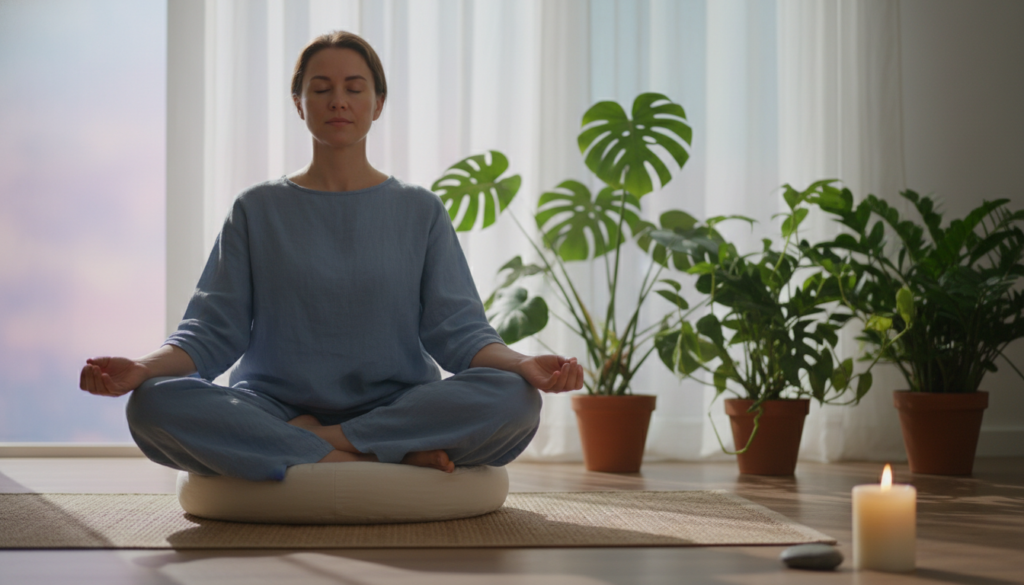
Starting at your feet and moving upward shows how small, focused noticing eases stress. This simple body scan shifts attention from looping thoughts into direct physical feeling. It’s a short practice you can use anytime to calm the nervous system.
How to scan from feet to head
Move attention slowly through each part: toes, feet, legs, pelvis, abdomen, back, chest, shoulders, arms, hands, neck, face, and head. Pause a few breaths on each part and notice any sensations without trying to change them.
Working with aches, restlessness, and “doing nothing”
If an ache appears, note its intensity, shape, or temperature. Observe how sensations shift over breaths instead of forcing them away.
If restlessness or the “I should be doing something” urge shows up, name it and then gently move to the next part. You have permission to adjust posture if pain spikes—change position mindfully and resume the scan.
If you fall asleep, how to restart without frustration
If you nod off, take one deeper inhale, open your eyes briefly, or sit a bit more upright. Then return to the last body area you remember and keep going without self-judgment.
After the scan: stand up slowly and notice how the body feels as you return to your day.
Walking Meditation to Bring Stillness Into Movement
Bring stillness into motion by treating each footfall as a tiny moment of focus. Walking is a practical option for people who struggle to sit still or who want to add mindfulness into everyday movement.
Step-by-step: pace, posture, and attention to each step
Choose a short path and stand tall but relaxed. Keep shoulders soft and chin slightly tucked. Hands can rest at your sides, behind your back, or on your belly—pick what feels steady.
Start at a natural, often slower pace. Notice the lift → move → place cycle of each step. Feel how the foot leaves the ground and returns. This physical loop is your anchor for attention.
Counting steps and returning when the mind drifts
Use counting as a focus tool: count 1–10 steps and then restart at 1. If your mind wanders, name the distraction briefly—then come back to the sensations in your feet and legs.
Each return is the practice. Short resets are fine; they are the training reps that build calm.
Staying aware of your environment outdoors
Outdoors, widen your field of awareness so you stay safe around cars, bikes, and uneven ground. Keep inner attention on each step while also scanning for hazards.
Try 3–5 minutes after lunch, between meetings, or as a simple transition from work to home. This way you fold mindfulness and movement into a busy world.
Tip: Walking offers a low-friction practice you can do almost anywhere—one steady step at a time.
Loving-Kindness Practice to Train Calm Through Compassion
Cultivating kindness toward yourself and others can quiet reactive emotions and steady the nervous system. Compassion-based practices reduce threat reactivity and help create warmer, steadier responses under stress.
How to use the four-part phrase cycle
Sit comfortably, take a few steady breaths, and choose the traditional phrase cycle: May I live in safety, May I have mental happiness, May I have physical health, May I live with ease. Repeat one phrase at a time, leaving brief silent gaps between each repetition.
Expanding kindness to others
Start with yourself, then move to someone supportive, a neutral person, a difficult person (only if it feels safe), and finally all beings in the world. You don’t need to force feeling—intention often leads to feeling over time.
Practice tip: Use this before a hard conversation, after conflict, or when self-criticism rises to shift focus from reactivity to calm.
Note: Loving-kindness is a simple meditation practice that builds connection and steady care toward yourself and others.
Mantra Meditation and Repetition Practices
Repeating a simple sound or short phrase can steady a busy mind and give attention a clear landing place. Mantra meditation is a focused practice where the phrase becomes your anchor whenever thoughts wander.
How repetition supports focus
Repeating a word gives attention a steady “handle.” That steady handle helps the mind return quickly from distraction, especially in noisy or rushed settings.
Silent vs spoken repetition
Silent repetition is discreet and often calming. Spoken repetition can feel grounding when you’re scattered or sleepy.
Choosing your anchor and a mini how-to
Pick a neutral word, a short value-based phrase, or a traditional mantra that fits your background. Set a timer for 5–10 minutes, breathe for a minute to settle, then begin repeating the phrase.
When attention drifts, gently bring it back to the phrase without judgment.
Practice tip: if repetition feels mechanical, slow your pace; if tension rises, soften the breath and reduce effort.
Pairing tip: try two minutes of breath to settle, then move into mantra to deepen focus and make the technique feel natural.
Making Meditation a Daily Practice That Sticks
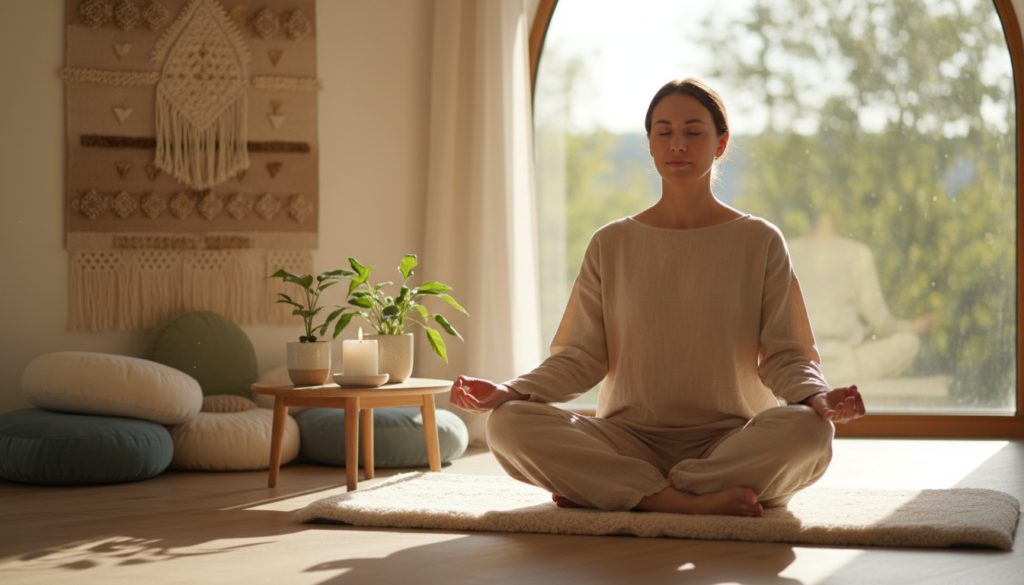
Build a daily routine by linking a short practice to something you already do. Small cues and clear plans make it more likely you’ll return tomorrow and the next day.
Behavior design: prompts, reminders, and “if this, then that”
Make the easy option obvious. Place a cushion where you’ll see it, set a phone alert, or leave a note on your coffee maker.
Use simple if-then rules: if the coffee brews, then five minutes; if you close your laptop, then three breaths; if you get in bed, then a short body scan.
Best time of day: morning vs night
Try mornings to protect attention for the workday. Try evenings to downshift and sleep better. The best time is whatever you repeat.
Consistency over duration
A few minutes daily trains attention. Research finds benefits from short, regular sessions — even under ten minutes can add up. Track lightly by marking an X on a calendar to build momentum.
Solo vs group practice
Solo work builds independence; group sessions add accountability and social support. Both are valid — choose the way that helps you keep going.
Practice tip: missed days are normal. Restart the next day without treating it as failure.
Common Challenges and How to Work With Them
At first, the process can feel like a fight with your own attention rather than a calm pause.
Restlessness, itchiness, and the urge to quit
Restlessness is often nervous system energy that appears when you stop distracting yourself. It is not proof you can’t do the practice.
Try this itch protocol: notice the sensation for a few breaths, watch it change, then scratch mindfully if needed and return to your anchor.
Racing thoughts and doubts
Racing thoughts are normal. You are not aiming to stop the mind; you are learning to recognize thinking sooner and return more often.
If “I can’t do this” shows up, label it as a thought, acknowledge it, and guide attention back. That gentle reframe is the training.
Strong emotions and body reactions
Grief, anger, or tightness in the chest can surface. Ground in the breath or a contact point—hands on knees, feet on floor—to feel safe in the moment.
If sensations feel intense, shorten the session, pace yourself, and avoid pushing through. Tears, heat, or shaking are common and okay.
Next step: if challenges feel overwhelming, try a guided session or seek extra support from a teacher or provider.
Benefits You Can Expect With Regular Meditation Practice
Over weeks, small daily practice often shows up as clearer thinking and faster recovery from stress. These changes are usually gradual and show as better bounce-back after hard moments rather than nonstop calm.
Lower stress, anxiety, and depressive symptoms
Research summaries report drops in stress and fewer anxiety or depressive spirals for many people. Regular short sessions can reduce reactivity and help emotions settle more quickly.
Help improve focus, attention, and problem-solving
Training the return-to-anchor skill strengthens the brain‘s ability to notice distraction and re-engage with tasks. A calmer mind often sees options more clearly under pressure.
Better sleep quality and improved overall health habits
Practices that lower rumination help with downshifting at night, which can improve sleep. People also report healthier habits—more movement and wiser food or alcohol choices—because impulses become easier to notice.
Support for symptoms related to post-traumatic stress disorder
Some evidence shows benefit for symptoms related to post-traumatic stress disorder, but this is not a replacement for trauma-informed care. Pace practice and seek professional guidance when needed.
Set realistic expectations: benefits build with regular practice and show up as better recovery from stress, clearer focus, and healthier daily habits.
When to Get Extra Support
Sometimes a little external support makes steady practice possible when solo work stalls. Getting help is a practical step, not a sign of failure. Consider outside options if you struggle to start, feel stuck in rumination, or need more structure than self-guided sessions provide.
Using guided sessions, apps, classes, or a teacher
Guided sessions are beginner-friendly because they reduce decision fatigue and self-judgment during a sit. Apps offer timers, reminders, and structured tracks that make it easier to build a short daily habit.
Classes and teachers give feedback on posture, pacing, and working with hard experiences. A local or online group can boost consistency and provide social support for practice.
Talking with a healthcare provider for mental health concerns
Talk with a clinician if you have significant anxiety, depression, trauma symptoms, or intense reactions during practice. Mental health providers can suggest trauma-sensitive pacing. That might mean eyes-open work, shorter sessions, or grounding-based ways to stay safe.
Seeking support is a skillful choice. It helps you keep practicing with care and builds sustainable routines over time.
Conclusion
Learning to pause is a practical skill you can build one short session at a time. Stillness is a skill, and meditation offers a clear way to train it within everyday life.
Remember the core options: breath anchor, the short mindfulness script, a body scan, walking practice, loving-kindness, and mantra. Each method trains the same basic loop: focus → wander → notice → return.
Next step: pick one method and commit a small, realistic time block each day for seven days. Be kind to yourself; progress shows up as more returns and less self-criticism, not a perfectly quiet mind.
Tip: fold short sessions into life transitions — morning starts, commutes, or before sleep — so calm becomes a lived habit.