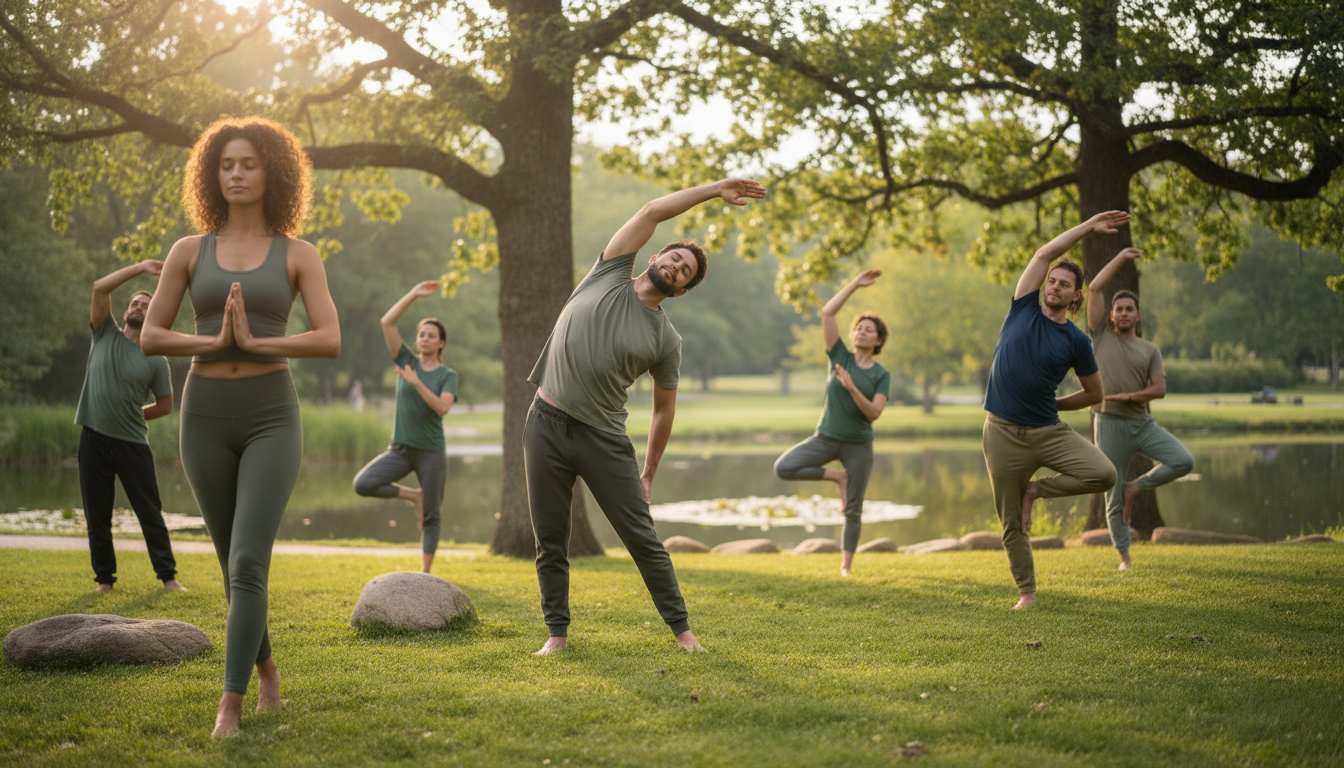
You don’t need to sit perfectly to start. If restlessness has kept you away, this guide offers a friendly promise: you can begin with short, doable steps and still get results.
This how-to shows a simple breath-based method, movement-friendly options, quick fixes for common obstacles, and a habit plan that fits a real day. Expect the mind to wander and the body to move. None of that means you’re doing it wrong.
Practice is training attention on purpose and gently returning it when you drift. Beginners can start with 5–10 minutes, notice wandering, and end with kindness and a brief self-check.
What’s ahead: why restlessness isn’t a dealbreaker, benefits you can actually notice, easy setup tips, the core method, walking or chair alternatives, troubleshooting, and a simple plan to keep going.
Anywhere works — chair, couch, walking path, or floor are valid starting points if they’re safe and comfy. The goal is less brain chatter at work, steadier emotions in conversations, and a calmer response to stress.
Why restlessness doesn’t disqualify you from mindfulness meditation
You can train focus even when your body wants to move — restlessness is practice in disguise. Think of this as a short training process that helps you choose where attention goes.
What this is: a simple, secular way to learn the skill of returning to an anchor. The anchor is the breath you feel at the nose, chest, or belly. Using that anchor makes it easier to notice when the mind wanders.
Training attention with an anchor
The practice involves focusing on the sensations of the breath. Each return to those sensations strengthens your ability to direct attention.
What success actually looks like
Success is not an empty head. It is noticing you drift — maybe after one breath — and gently coming back without self-judgment.
Why the empty-mind myth is misleading
“I realized my mind wandered after one breath.”
Thoughts and sensations will appear. Mindfulness is about relating differently to them, not erasing them. That shift is the whole process and it works for people who move, fidget, or think a lot.
Meditation benefits you can feel in daily life
Simple, short practice can cut down on stress spikes and quiet mental noise. You can notice calmer baseline moods and fewer moments of frantic thinking during your work or before sleep.
Lower stress, less chatter, steadier emotions
Fewer stress spikes means you react less to small triggers. That pause helps you spot looping thoughts and choose a different response, so anxiety and mood feel easier to manage.
Better focus, sleep, and resilience over time
Short sessions improve real-world focus attention — staying with an email, a conversation, or a task without switching every minute.
At night, a brief practice can downshift your nervous system and make falling asleep easier. Over weeks, your ability to meet hard emotions without escalating grows stronger.
What research and the brain suggest
Imaging and EEG studies show repeated attention training strengthens areas tied to senses, concentration, and emotion processing in the brain.
“About 12 minutes, five days a week can protect and strengthen attention.”
Research supports that small, regular efforts add up: some benefits show quickly, while focus and resilience build with time and steady practice. Overall, meditation helps make day-to-day life feel less noisy and more manageable.
Set yourself up for a doable meditation practice
Start with tiny, practical choices that support your body and your schedule. A clear setup lowers resistance and makes a short routine feel normal.
Pick a comfortable place and posture
Choose a repeatable place that reduces friction: a chair by the bed, a couch corner, or even a parked car on a lunch break.
For posture, favor stability over “perfect.” Try a chair with feet planted and hands on thighs, or sit on the floor with support under the hips. When the body feels supported, the mind has fewer reasons to bolt.
Choose a short time limit
Set a small time goal to lower resistance. Start with 2–5 minutes if you’re very restless. Build toward 10 minutes when it feels doable.
Decide on eyes open or closed
If you get sleepy, open your eyes with a soft downward gaze. Closed eyes can help if visual input pulls you away, but only use them if they don’t make you drowsy.
Quick tip: take deep one breath to settle, then let breathing return to normal so the practice feels simple. Even one intentional moment trains the same skill of returning attention.
Meditation: the simplest breath-based method for people who can’t sit still
Start with a small, clear step: feel your body for ten seconds, then follow one breath. This short intro helps make the session feel achievable and kind.
Settle in and notice the body before you focus
Plant your feet or feel the seat under you. Relax your shoulders and jaw for a few counts. Spend ten to twenty seconds simply scanning the body, noticing tension or ease.
Find your breath sensations (nose, chest, belly)
Pick the easiest spot where you can feel air moving — nose, chest, or belly. Stay with the raw sensation, not a story about breathing. Keep a light grip: notice the breath like background music.
When distractions happen, gently return to the breath
Label distractions softly (“thinking,” “hearing”) and come back. Say to yourself, back to the breath, back to the breath, as often as needed. If you must shift position, do it mindfully and return.
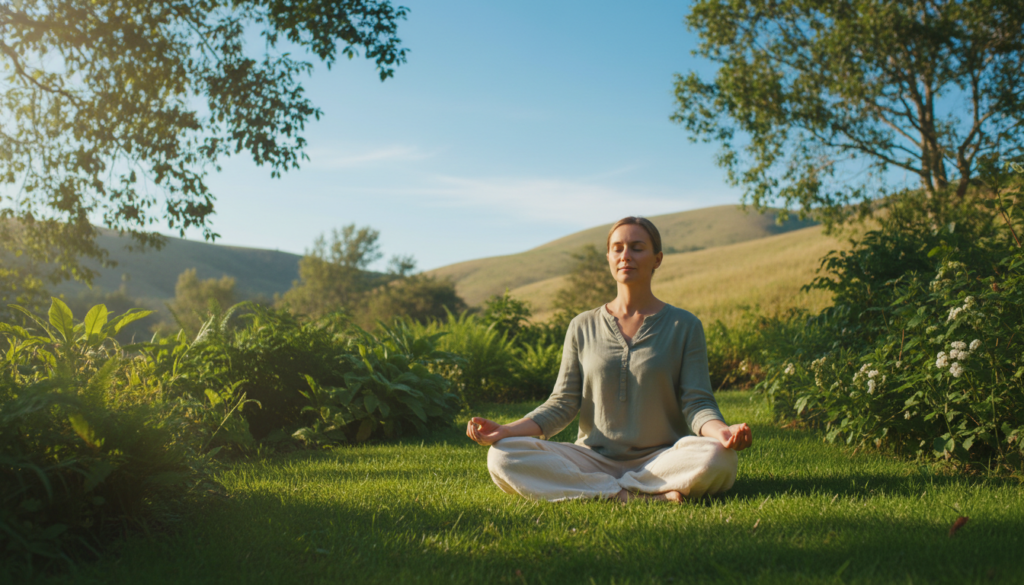
End with a moment of kindness and quick self-reflection
Close by noticing sounds, body sensations, thoughts, and emotions for a breath or two. Acknowledge that you showed up. Carry one calm breath into the next moment.
Movement-friendly techniques when sitting still feels impossible
If sitting still feels impossible, try practices that let the body move while you train attention. These are legitimate options, not shortcuts. Use them when restlessness or a busy schedule makes sitting unhelpful.
Walking meditation for active minds and busy schedules
Choose a hallway, backyard, or sidewalk and walk at a natural pace. Notice the lift and fall of each foot and keep a soft awareness of surroundings for safety.
For structure, count steps 1–10 and restart when you reach ten. Use counting as an anchor when the mind runs fast and return gently when attention wanders.
Body scan for tuning into physical sensations
Scan from toes to head, pausing briefly on toes, feet, legs, pelvis, abdomen, back, chest, shoulders, arms, hands, neck, face, and scalp. Notice sensations without judging them.
If you drift or nod off, take a deep breath and reposition. This practice helps locate tension and supports sleep or pain management.
Mindful movement and yoga-inspired awareness
Try slow neck rolls, shoulder circles, and a gentle forward fold paired with breath. Focus on sensation, not performance. Small repeated movements train attention in a body-based way.
Loving-kindness to work with emotions and self-criticism
Silently repeat phrases such as “May I live in safety… May I live with ease.” Return kindly when the mind wanders. This practice softens harsh inner talk and eases strong emotions.
Guided options for beginners who want structure
Use guided meditation tracks when decision fatigue is high. Clear prompts reduce second-guessing and keep beginners engaged. Choose walking, body-scan, or yoga-guided tracks to match your energy.
How to choose: pick walking for restless energy, a body scan for tension, loving-kindness for harsh self-talk, and guided practice for structure. These techniques let you build skill in a form that fits your life.
Common obstacles and how to work with them in the moment
Every interruption in a session is an opportunity to practice returning your attention. View discomfort as training, not failure. Small choices in the moment build skill.

If you get itchy, fidgety, or uncomfortable
Notice the itch for one to three breaths. Try “scratch it with your mind” — observe the sensation before acting.
If you still need to move, make one mindful adjustment: shift hips, relax shoulders, or scratch once. Return to your anchor right away.
If you’re distracted by thoughts, sounds, or strong emotions
Label distractions gently — “thinking” or “hearing” — then come back. The win is noticing sooner when your mind wanders.
For intense emotions, ground in body points: feet, hands, or belly. Use a steady deep breath to hold the field of awareness while feelings pass.
If you get sleepy during practice
Sit more upright, open your eyes slightly, shorten the session, or switch to walking. If you nod off, take deep breath, reposition, and resume.
If you think “I can’t meditate”
Turn that phrase into an object of attention. Noticing “I can’t” is itself practice — the act of returning again is the real rep that builds confidence.
Make it stick: building a regular meditation habit without forcing it
A few tiny, repeatable actions can turn a single session into a steady habit. Think of the goal as steady consistency you can keep, not a perfect streak you must defend.
Use behavior design: pick one visible place for practice — a chair, cushion, or corner — and keep it ready so starting takes ten seconds. Put a cushion where you’ll see it, set a friendly alarm, or leave a note you refresh weekly.
Micro-practices you can do any time
Try simple if this, then that cues: “If I sit in my car, then one deep breath,” or “If I open my laptop, then three breaths.” Keep these moments short so they fit your day.
How often and when
Start with 5 minutes most days and scale to 10–12 minutes when it feels natural. Longer periods are optional; the process rewards regular time, not long sessions only.
Choose a slot you can repeat: morning to set tone, mid-day for a reset, or night to unwind. Track changes by noting real-life shifts in focus, reactivity, or sleep — those signs show your ability is growing.
Try this gentle commitment: one small practice every day for one month, then adjust without judgment. That low-pressure plan makes a new habit part of your life, not a test to pass.
Conclusion
Remember: small, regular steps build real calm, even when your body wants to move.
This is the core: train attention kindly, not perfectly. An active mind gives you extra chances to return and strengthen awareness.
Quick recap in one line: notice the body → feel the breath → wander → return → end with kindness. That simple flow is the heart of the practice.
Try different techniques — sitting, walking, body scan, loving-kindness, or guided sessions — and pick what helps you show up.
Benefits you can expect: less stress, quieter mental chatter, steadier emotions, and better focus over time. Try 5 minutes today (or 2 minutes if that’s easier) and repeat tomorrow.
Be gentle. Each attempt is training, not a test. Keep going with patience and simple consistency — it really helps.