
Many beginners quit because they think meditation means having zero thoughts. That idea sets a near-impossible bar and makes the whole thing feel like failure before it starts.
Real success looks different: you notice your attention drift, then gently return it. That simple cycle is the core skill.
Teachers like Sharon Salzberg and researchers such as Richard J. Davidson remind us this is normal. This practice is a family of activities, not a single trick.
This short guide shows a repeatable approach you can try today and options to grow later. Expect frustration at first — a busy mind, physical discomfort, or the question, “Am I doing it right?” — and practical tips to handle each.
Think of this as training like fitness: progress is gradual and measurable. Over time you can expect clearer focus, better sleep, less stress, and more resilience, though it is not a cure-all.
Why “Emptying Your Mind” Is a Myth (and Why It Stops People From Starting)
Expect your mind to drift; that’s the rule, not the exception. Telling beginners to clear every thought sets an impossible bar. When a thought appears, many people feel they have failed and give up.
Sharon Salzberg tells the simple “one breath” story to show how normal wandering is. You take a breath, the mind wanders, then you come back. That short loop is the whole process.
Mind wandering is normal: the real skill is noticing and returning
Most behavior runs on autopilot — roughly 95% by some estimates. Mindfulness trains executive control instead of default habits.
In practice the cycle is clear: focus attention → mind wanders → notice mind → return kindly. Each return is the rep that builds attention muscles.
Mindfulness vs. autopilot: shifting from default habits to intentional attention
Autopilot living uses stories about the past and future. Mindfulness brings attention back to the present moment.
You will notice thoughts like “I should email my boss” or “I forgot the gym.” Treat those as mental events, not commands. That shift from reacting to noticing is the way change begins.
Once you stop chasing blankness, practice becomes doable. Distraction is not a failure — it’s the work. This frees you to learn the simple steps that follow, where meditation helps you build steady awareness.
What Meditation Really Is (Simple Definition for Real Life)
Think of it as a basic skill: steadying your attention so life feels less scattered.
Plain definition: meditation is attention training that usually involves focusing on something simple—often the breath—and gently returning when you drift. Say that line to yourself; it helps make the idea repeatable and practical.
The breath works well as an anchor because it is always with you, neutral, and ties mind and body together. Using breath as a focus attention point gives a reliable way to ground practice in daily life.
This practice shows up in many traditions. It can be religious or nonreligious and still help. Examples include mantra work, body-scan or self-scanning, movement-based forms, and contemplative prayer or reflection. Each form shares common processes: choosing an anchor, noticing distraction, and returning kindly.
Modern research keeps refining what we know about outcomes, so guidance today rests on both tradition and science. The practice is simple, but consistency is the way you begin to notice calmer moods, clearer focus, and steady awareness in everyday life.
What You Can Get From a Regular Meditation Practice
A short, regular practice can change how you feel and how your brain responds to stress. Many beginners notice a small calm in the body, less reactivity, and easier sleep within days to weeks. Those first shifts are common and encouraging.
Stress reduction, emotional health, and better sleep
Simple relaxation effects include lower blood pressure, slower heart and breathing rates, and reduced cortisol. Over time these changes support better rest and fewer anxious moments.
Focus, attention, and brain benefits supported by modern research
Imaging and EEG work show stronger connections in areas that handle attention and emotions. One study notes that just 12 minutes, five days a week, protects and strengthens attention — a realistic time goal for busy people.
Resilience and healthier relationships through greater self-awareness
Practice does not erase thoughts or “brain chatter,” but it changes your relationship to them. That shift helps you pause before reacting, name your emotions, and respond with less defensiveness.
“The point is not to stop thinking, but to learn a different way of relating to thoughts.”
Bottom line: benefits build with steady time and small, repeatable sessions. Consistency wins over long, rare sittings.
Meditation for Beginners: A Simple Step-by-Step Breath Practice
A simple seat, a short clock, and a steady breath are all you need to begin. Pick a quiet place and choose a stable posture you can hold for a short time: chair with feet on the floor, cross-legged, or kneeling.
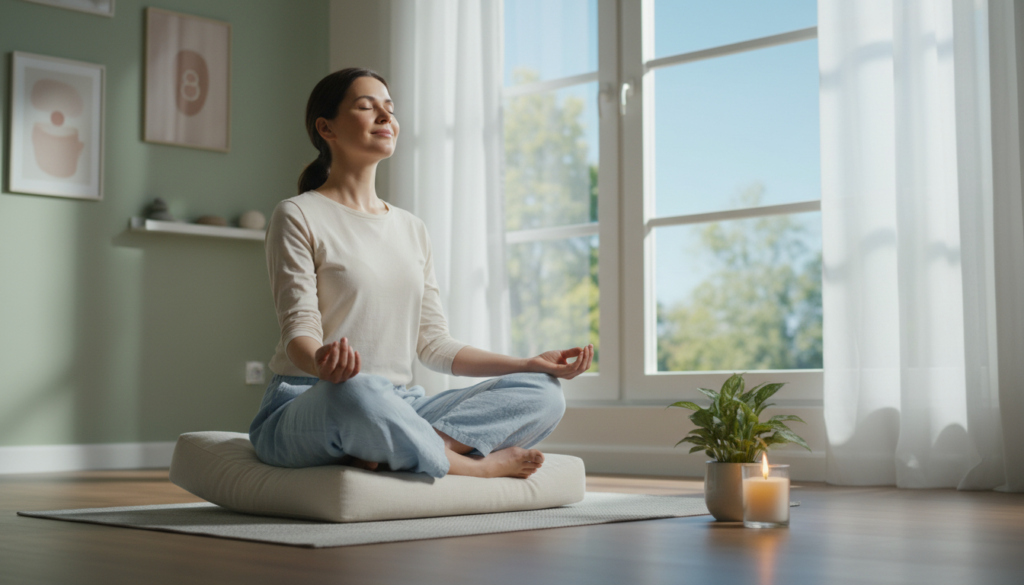
Choose a quiet place, a stable posture, and a realistic time limit
Set a timer for 5–10 minutes. If that feels long, start with 2–3 minutes. A clear finish line removes pressure and helps build habit.
Use the breath as your anchor and include body awareness
Pick one spot to feel the breath clearly—nostrils, chest, or belly—and stay there. Soften your shoulders, rest hands gently, and let your feet touch the floor if seated.
When your mind wanders, return to the breath without judgment
Notice thinking as it happens. Gently guide your focus attention back to the chosen point on the breath. No score, no shame—just a kind return.
Close your session with a brief moment of reflection or kindness
After the timer ends, take a deep breath and scan your body for one short moment. Offer a simple kindness phrase like “May I be patient with myself today.”
“Start small and build slowly; consistency matters more than length.”
Tip: If attention feels scattered, take one deep breath, then let breathing return to natural rhythm and resume practice. As habit forms, you can work toward longer periods.
Common Sticking Points and What to Do Instead
You will run into a few repeat problems—here’s a calm way to handle them.
Busy mind and brain chatter
Thoughts are normal. Treat each thought as a passing mental event, not an instruction you must follow right now.
Try this script: label gently—“planning,” “remembering,” “worrying”—then return to your anchor. Say the label once, and let it go.
Eyes open or closed
No hard rule: close your eyes if visual input distracts you; keep them open if you get sleepy or anxious.
If open, use a soft downward gaze. If closed, relax the eyelids and avoid forcing images. Pick the option that supports steady attention.
Itches, discomfort, and physical sensations
Distinguish pain from ordinary bodily itch or tension. If it’s minor, try “scratching it with your mind” first—notice the urge, label it, and wait a moment.
If needed, adjust posture skillfully: raise seat height, add back support, or uncross legs. Small fixes prevent discomfort from ending your session.
“Any moment you remember to come back is progress.”
Tip: steady attention over time matters more than a perfect session. Use these simple techniques to keep practice practical and kind.
Mindfulness Meditation Techniques to Try Beyond the Breath
Not every anchor fits every person. Try a few techniques and match a form to your temperament — restless, sleepy, or highly analytical — so practice feels natural.
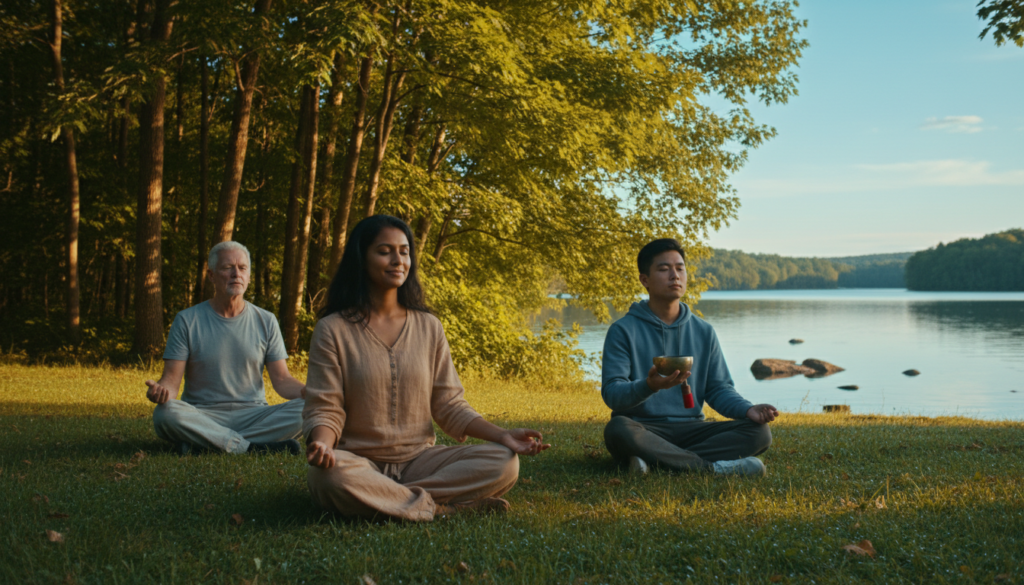
Body scan to build steady body awareness
Move attention slowly from the feet up to the head. Linger on sensations and avoid judging what you feel.
If your mind wanders, return to the last body spot you remember. This simple rule keeps the scan grounded and kind.
Walking to bring practice into movement
Walk at a natural pace and notice the lifting and placing of each foot. Try counting steps to ten, then restart.
Use short walks through a hallway, parking lot, or neighborhood to turn errands into practical practice.
Loving-kindness for emotional balance
Silently repeat phrases like “May I live in safety… May I have mental happiness… May I have physical happiness… May I live with ease.” Extend the same lines to others.
Wandering is expected; returning kindly is the work that trains compassion and steadier emotions.
Concentration using a single focal point
Choose a mantra, sound, or candle flame and refocus whenever attention drifts. This technique trains sharp, measurable focus.
Tip: guided meditation and mindful yoga are helpful bridges if you want structure or movement-based practices.
How to Make Meditation a Habit That Actually Sticks
Habits form when your environment nudges action, not when motivation spikes. Design your day so the desired practice is the easy default and autopilot has to work harder to pull you away.
Use behavior design: cues, reminders, and friction to beat autopilot
Place a cushion or chair where you can see it. Set an already-programmed timer and keep an app icon on your home screen. These small cues make starting almost automatic.
Create simple “if this, then that” moments for your day
Use short scripts you can copy: “If I sit at my desk, then one breath,” or “If phone rings, then pause and breathe.” Keep them under a minute so they fit busy schedules.
Start small and build toward longer periods without overhauling your schedule
Begin with 2–5 minutes and aim to reach 10–12 minutes, five days a week. Research suggests 12 minutes, 5 days/week supports attention and brain change.
Design beats willpower: remove friction (same place, set timer) and add friction for bad defaults (hide apps that steal time). Protect a tiny block of time each day and watch ability to focus grow. This process makes regular meditation a sustainable way to improve attention and lower stress.
“Start tiny, protect the time, and let design do the work.”
Conclusion
Starting is the meaningful win — the rest is repetition and kindness.
Keep the core loop simple: sit, pick an anchor like the breath or body, notice when attention drifts, return gently, and close with a kind phrase. This is the clearest way to build steady awareness.
Wandering is not failure; it is the practice. Each return trains attention and reshapes the brain over time. Expect benefits like less stress reactivity, better sleep readiness, improved focus, and steadier emotions.
Choose one technique (breath, body scan, walking, loving-kindness, or a mantra) and stick with it for a week. Then reassess.
Most important moment is the moment you sit down to do it. Set a short timer today, practice once, and pick a tiny daily window to repeat tomorrow.